 Skip to main content
DIN rails do not carry power themselves; they are simply metal structures used for mounting electrical components. Power can be supplied through DIN rail power supplies, but this is separate from the physical rail itself.
A DIN rail power supply is a compact power supply unit designed to mount directly onto a standard DIN rail inside an electrical cabinet or control panel. It converts incoming AC power into a stable DC output, powering devices such as relays, sensors, controllers, actuators, and other industrial automation equipment.
DIN rail power supplies are widely used in industrial, automation, telecoms and control system applications because they are space-efficient, reliable and easy to install. In this guide, we explain what a DIN rail power supply is, how it works, the main types available, and what to consider when choosing the right DIN rail PSU for your application.
What Is a DIN Rail Power Supply?
DIN rail power supplies are specialised electrical devices that provide reliable and efficient power in industrial applications. They convert mains AC voltage into a stable DC output, allowing connected devices to operate smoothly. This conversion is achieved through the use of rectifying diodes and electronic regulation, which together maintain a consistent and regulated DC output voltage.
One of the standout features of DIN rail power supplies is their design for easy installation on standard DIN rails. These rails allow for compatibility with various control panel configurations, making DIN rail power supplies a flexible and adaptable choice for many industrial setups. Their compact design efficiently utilises space within control panels, a significant advantage in environments where space is limited.
The benefits of DIN rail power supplies extend beyond just their functional capabilities. Their ease of installation, space efficiency, and reliability make them a preferred choice over traditional power supplies in many industrial settings. These power supplies are integral components in modern industrial systems due to their efficiency and reliability.
How Do DIN Rail Power Supplies Work?
DIN rail power supplies convert AC power into regulated DC voltage, starting with rectification. Rectifying diodes allow current to flow in one direction, converting AC voltage to DC. This is followed by a voltage regulation stage, where feedback control and electronic components ensure a stable output voltage.
Many DIN rail power supplies include filtering stages that reduce ripple and noise to further enhance the quality of the DC output. This is particularly important in sensitive industrial applications, where even minor fluctuations in power can lead to significant disruptions. Many modern units utilise switching technology, improving efficiency and reducing heat generation during operation.
The combination of these technologies ensures that DIN rail power supplies can deliver reliable, high-quality power to various industrial systems. Their ability to maintain a regulated DC output voltage and reduce noise and heat makes them superior to most traditional power supplies. These key features make them the backbone of many industrial and automation systems.
Key Features of DIN Rail Power Supplies
I am text block. Click edit button to change this text. Lorem ipsum dolor sit amet, consectetur adipiscing elit. Ut elit tellus, luctus nec ullamcorper mattis, pulvinar dapibus leo.
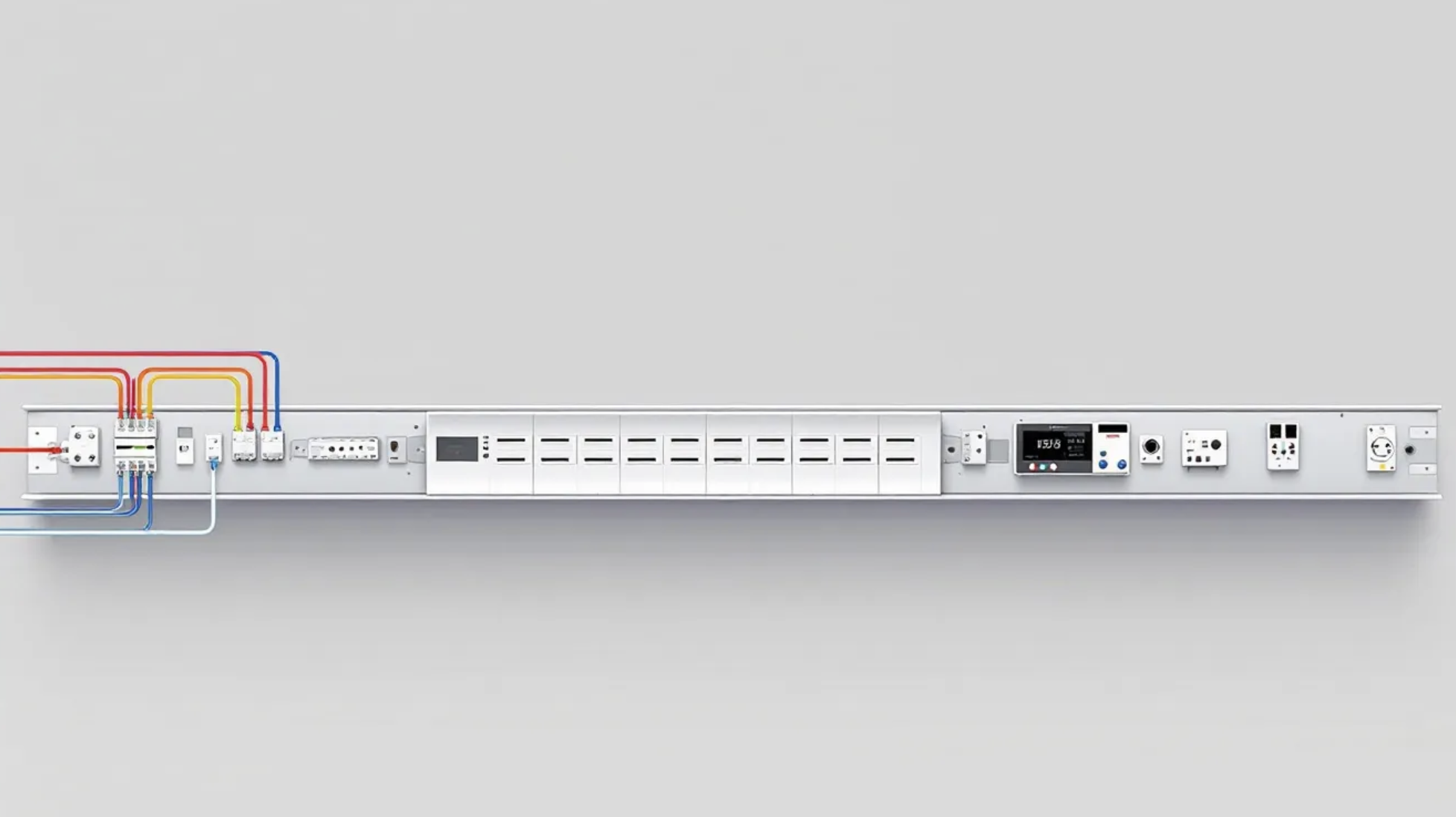
DIN rail power supplies come equipped with a range of features designed to enhance their performance and reliability. Built-in protections, such as short-circuit and overvoltage safeguards, ensure the safety and longevity of connected electrical components by preventing damage from power surges or faults.
Their compact design allows for easy installation in tight spaces, which is particularly beneficial in crowded industrial control panels. DIN rail power supplies’ compact size ensures they can fit seamlessly into these setups without compromising on performance.
Recent design advancements have improved energy conversion rates, making DIN rail power supplies more efficient in delivering electrical power and enhancing energy efficiency. These improvements reduce energy losses and lower operational costs, essential in industrial environments.
Many modern DIN rail PSUs also include features such as wide input voltage ranges, low standby power consumption, tool-free terminals and high operating temperature tolerance. These features can make installation easier, improve long-term reliability and support stable operation in demanding environments.
These features make DIN rail power supplies a robust and reliable power solution for modern industrial systems.
Types of DIN Rail Power Supplies
DIN rail power supplies come in various types, each designed to meet specific power requirements. Single-phase DIN rail power supplies are used for low-power applications, offering a simple and cost-effective solution for many industrial needs. They are ideal for powering control panels and small machinery with relatively low power demands.
Three-phase DIN rail power supplies handle the increased power demands of larger industrial machinery and equipment, making them suitable for intensive applications. Distributing power across three phases ensures a balanced load and improved efficiency.
DC-DC converters are designed to convert one DC voltage to another, ensuring that all system components receive the appropriate power by providing the necessary voltage conversion.
Redundant DIN rail power supplies ensure continuous power in critical applications by providing a backup power source that automatically switches if the primary supply fails. This feature is crucial in environments where uninterrupted power is essential, such as data centres and critical industrial processes.
Benefits of Using DIN Rail Power Supplies
A primary benefit of DIN rail power supplies is their modularity and ease of replacement. In industrial systems, components often need to be replaced or upgraded, and the modular design of DIN rail power supplies simplifies this process. Modularity also allows for easy customisation of power distribution systems to meet specific needs.
Their robust durability ensures consistent performance even in challenging industrial settings. Designed to withstand harsh conditions, including extreme temperatures, humidity, and dust, they require less maintenance and have a longer lifespan, making them a cost-effective choice for many applications.
These power supplies enhance efficiency, reliability, and system organisation through versatile additional power supply features and safety mechanisms. Incorporating built-in protections and advanced design elements, they help ensure smooth operation, reducing downtime and improving productivity. Our power supply solutions are designed to meet these needs effectively.
For businesses operating control panels, automation systems or industrial equipment, these benefits can help reduce installation complexity, improve serviceability and support long-term system uptime.
How to Choose the Right DIN Rail Power Supply
Choosing the right DIN rail power supply depends on the electrical requirements of the equipment it needs to support, as well as the environment where it will be installed. The first step is to confirm the required output voltage and current, along with the total power demand of the connected devices. Common output voltages include 12V, 24V and 48V DC, but the correct choice will depend on the application.
It is also important to consider the available space inside the control panel, the operating temperature range, ventilation, input voltage, safety approvals and protection features such as overload, overvoltage and short-circuit protection. In applications where uptime is critical, redundant DIN rail power supplies may also be required to provide backup power if the primary unit fails.
Selecting the correct unit helps improve reliability, reduce downtime and support safe operation in demanding environments. Ideal Power supplies a wide range of DIN rail power supplies for industrial, automation and control panel applications.
How to Choose the Right DIN Rail Power Supply
Choosing the right DIN rail power supply depends on the electrical requirements of the equipment it needs to support, as well as the environment where it will be installed. The first step is to confirm the required output voltage and current, along with the total power demand of the connected devices. Common output voltages include 12V, 24V and 48V DC, but the correct choice will depend on the application.
It is also important to consider the available space inside the control panel, the operating temperature range, ventilation, input voltage, safety approvals and protection features such as overload, overvoltage and short-circuit protection. In applications where uptime is critical, redundant DIN rail power supplies may also be required to provide backup power if the primary unit fails.
Selecting the correct unit helps improve reliability, reduce downtime and support safe operation in demanding environments. Ideal Power supplies a wide range of DIN rail power supplies for industrial, automation and control panel applications.
Installation and Maintenance Tips
Proper installation and maintenance ensure the reliable operation of DIN rail power supplies. To ensure a proper fit, the installation space must be compatible with the device’s dimensions. Appropriate tools, such as wire strippers and screwdrivers, also ensure a successful installation. Grounding the power supply and DIN rail prevents electrical hazards during operation.
Thermal management is also critical. Ensure adequate airflow around the unit to prevent overheating, as DIN rail power supplies are designed to effectively dissipate heat. Minimising cable length and diameter helps reduce energy loss and heat generation, especially for higher loads.
Maintenance includes verifying connections for tightness and correct polarity before powering on the system. Choosing a power supply with built-in protections, such as short-circuit and overload protection, ensures safe operation in demanding environments. DIN rail power supplies’ modular design enables straightforward maintenance and upgrades without disrupting the entire system.
For safety and compliance, installation and inspection should always be carried out by suitably qualified personnel. The unit should also be selected and installed in line with the manufacturer’s guidance, the application requirements and any relevant electrical standards.
Why Choose Ideal Power for DIN Rail Power Supplies?
Ideal Power supplies a wide range of DIN rail power supplies for industrial control panels, automation systems, electrical cabinets and related applications. Our range includes compact, efficient and reliable options designed to support different output voltages, power ratings and installation requirements.
We can help you identify a suitable DIN rail PSU based on your application, load requirements, operating environment and compliance needs. Whether you require a standard unit or support selecting a power supply for a specific control system or installation, our team can provide guidance on the most suitable options.
With experience supplying power solutions across industrial, commercial, medical, lighting and technical applications, Ideal Power can support projects where reliability, certification, lead times and long-term availability are important.
Summary
In summary, DIN rail power supplies are indispensable components in modern industrial applications. Their ability to convert mains AC voltage into stable DC output, coupled with features like built-in protections and compact design, makes them a reliable and efficient power solution. The various types, including single-phase, three-phase, DC-DC converters, and redundant models, cater to diverse power requirements, ensuring versatility across different applications.
The benefits of using DIN rail power supplies, such as modularity, durability, and enhanced efficiency, make them a preferred choice in many industrial settings. With proper selection, installation, and maintenance, these power supplies can provide long-term reliability and support the smooth operation of industrial systems. As innovations continue to evolve, DIN rail power supplies will remain at the forefront of industrial power solutions.
If you need support choosing the right DIN rail PSU, Ideal Power can help you review the available options and select a suitable product for your control panel, automation system or wider application.
Frequently Asked Questions
What is the difference between busbar and DIN rail?
The primary difference is that a DIN rail serves as a mounting structure for devices and does not carry electrical current, while a busbar is a conductive component that electrically interconnects circuits and isolation devices. Thus, they serve distinct functions within electrical installations.
Do DIN rails carry power?
DIN rails do not carry power themselves; they are simply metal structures used for mounting electrical components. Power can be supplied through DIN rail power supplies, but this is separate from the physical rail itself.
What does DIN stand for in DIN rail?
DIN stands for Deutsches Institut für Normung, which translates to “German Institute for Standards.” This denotes the standardisation organisation that established the specifications for DIN rails.
What is a DIN rail power supply used for?
A DIN rail power supply converts AC input, typically from the mains supply, into various DC output voltages to power equipment like sensors and controllers. Its ease of installation makes it a staple in industrial automation settings.
What is the primary function of a DIN rail power supply?
The primary function of a DIN rail power supply is to convert mains AC voltage into a stable DC output, ensuring reliable power for various industrial applications.
