 Skip to main content
What Is the Standard Unit for Power? Watts, Kilowatts and Power Supply Sizing Explained
Understanding units of power is essential when reading a technical specification, comparing power supply units, calculating power consumption or specifying a system safely. In many projects, terms such as watt, kilowatt, power output, peak power and watt-hour appear together, but they do not mean the same thing.
A power supply must do more than simply power a piece of equipment. It must deliver the right power at the right time, within the expected limits for voltage, current, temperature, efficiency and compliance.
For engineers and manufacturers specifying a power supply, wattage is often one of the first figures used to narrow down suitable products. However, the wattage rating is only useful when considered alongside the load requirements and the conditions under which the equipment will operate.
What is Power?
Power is the rate at which energy is transferred, converted or used. In electrical systems, it is usually used to describe either how much power a device needs to operate or how much power a supply can deliver to the connected equipment.
The general formula is:
P = E ÷ t
In this formula, P represents power, E represents energy, and t represents time. In practical power supply selection, the more commonly used calculation is based on voltage and current:
P = V × I
For example, if a device requires 24 V and draws 2 A, the power requirement is 48 W. This calculation gives a useful starting point, but it does not confirm the full specification. The selected power supply still needs the correct output voltage, enough current capacity, suitable connectors or mounting format, and the right approvals for the application.
What is the Standard Unit of Power?
The standard unit of power is the watt, shown by the symbol W. One watt is equal to one joule per second.
Larger units are derived from the watt. A kilowatt, written as kW, is equal to 1,000 watts. A megawatt, written as MW, is equal to 1,000,000 watts. For most power supply projects, watts and kilowatts are the most relevant units, as they describe the output power available from a supply or the power required by the connected load.
When a power supply is rated at 60 W, this means it can deliver up to 60 watts of output power under the conditions specified by the manufacturer. It does not mean that every 60 W power supply is suitable for every 60 W application, as voltage, current, efficiency, operating temperature and approvals still need to be checked.
Watts, Kilowatts and Power Supply Ratings
Watts are used across a wide range of power supply products, from lower-power external adapters to higher-power industrial systems. A compact external PSU may be rated at 12 W, 60 W or 120 W, while larger system-level supplies, chargers, automation equipment or industrial applications may require several hundred watts or more.
Output power should never be assessed on its own. A 12 V 5 A power supply and a 24 V 2.5 A power supply are both 60 W units, but they are not interchangeable. One is designed for 12 V equipment and the other for 24 V equipment.
If the voltage is incorrect, the equipment may not operate as intended and could be damaged. If the current rating is too low, the supply may run hot, shut down, suffer voltage drop or fail earlier than expected. This is why power supply sizing should always start with the load, not with the wattage figure alone.
Our external power supply PSU range includes plugtop, interchangeable and desktop power supplies, with options available across a range of output voltages, current ratings and power levels. This makes it possible to compare options based on the required practical specification, rather than by wattage alone.
Watt, Watt-hour and Kilowatt-hour: What is the Difference?
A watt measures power at a specific moment. A watt-hour measures energy used over time.
If a 100 W device runs for one hour, it uses 100 Wh of energy. If it runs for ten hours, it uses 1,000 Wh, or 1 kWh. This is why electricity consumption is commonly measured in kilowatt-hours, while power supplies are usually rated by their output power in watts.
For PSU selection, the watt rating is normally the more important figure. The supply must be able to deliver the required power at the point the load demands it. Watt-hours are more relevant when considering batteries, stored energy or total energy use over a period of time.
This distinction is useful because a battery may store a certain amount of energy, but still be limited in how much power it can deliver at once. In the same way, a power supply should be assessed by its output capability and operating conditions, not simply by wider energy figures.
How to Measure Electrical Power in Real-world Systems
In electricity, power can be calculated and measured using the relationship between voltage and current:
P = V × I
If a load operates at 24 V and draws 2 A, its electrical power is 48 W. This formula is essential for interpreting datasheets, calculating output currents and checking whether a power supply is suitable for the device. It is also possible to use variations such as P = V² ÷ R or P = I² × R when the circuit resistance is known. In the energy industry, the same fundamentals support system design, safety checks, reporting and testing. Utilities and utility companies also use measurement tools to monitor demand across electricity grids. For PSU selection, however, the immediate purpose is more practical: confirming whether the supply can deliver the required voltage, current and total power under real operating conditions.
In the UK, the AC input of a power supply must accommodate the available mains supply and expected variations. The low-voltage mains supply is nominally 230 V, but equipment connected to the actual supply must tolerate the permitted ranges and installation conditions.
Furthermore, electrical products placed on the UK market must comply with applicable safety requirements. The UK government’s guidance on the Electrical Equipment Safety Regulations 2016 covers equipment designed for use between 50 and 1,000 V AC or 75 and 1,500 V DC.
Continuous Power and Peak Power
Continuous power is the output a power supply can deliver during normal operation. This is usually the figure used when sizing a PSU.
Peak power is the highest level of power that may be available for a short period, often during start-up or a temporary change in load. This can be important for equipment with high inrush current, such as motors, fans, pumps, relays, solenoids, capacitive loads and some LED systems.
A device may only require 80 W once running, but needs a higher level of power for a brief period when it is switched on. If this has not been allowed for, the PSU may trip, fail to start the equipment or operate unreliably.
Peak power should not be treated as a permanent rating. The datasheet should confirm how long the peak output is available for, along with the temperature, cooling and test conditions. Where this information is unclear, check the product datasheet before selecting the PSU.
How to Size a Power Supply Unit
The starting point is the equipment requirement. Confirm the output voltage, then check the maximum current the load will draw. Multiplying these together gives the basic power requirement in watts.
From there, the specification needs to be checked against the real application. The load may not be constant. There may be multiple devices operating at the same time, or short start-up peaks that are higher than the normal running current. The power supply may also be installed inside an enclosure, close to other heat-generating components or in an environment where the ambient temperature is higher than expected.
Efficiency should also be considered. A power supply does not convert all input energy into useful output energy. Some energy is lost as heat, and that heat has to be managed. This becomes more important in enclosed products, industrial panels, lighting applications, medical equipment and other systems where ventilation is limited.
A simple calculation might show that a device needs 48 W. In practice, a higher-rated unit may be required to allow for peak demand, thermal conditions and long-term reliability. The right level of margin depends on the application. Too little headroom can lead to shutdowns or premature failure, while excessive oversizing can increase cost, size and inefficiency at low load.
Choosing the Right Power Supply
The correct power supply should meet the equipment’s electrical, mechanical, and compliance needs. For an external PSU, this may include the output voltage, output current, connector type, cable length, plug format, enclosure style and relevant safety approvals.
For industrial or embedded applications, other factors may become more important, such as cooling, derating, mounting method, long-term availability and the ability to meet sector-specific requirements. A power supply used in a medical, railway, lighting, or industrial application may require different approvals than a standard commercial product.
This is where technical support can be useful. A datasheet may confirm the headline wattage, but it may not answer every question about the load, the environment or the end-use application. Ideal Power works with engineers, product designers and procurement teams to specify, source and supply power conversion products for new and existing designs. From external power supplies and AC/DC converters to DC/DC converters, battery chargers and LED drivers.
Speak To The Power Supply & Conversion Experts
Whether you need standard solutions or tailored power supply units, Ideal Power has the expertise to support your project needs. Let us help you find the perfect product for your project.
Summary
The standard unit for power is the watt. In power supply specifications, watts show how much output power a PSU can deliver.
To calculate electrical power, multiply voltage by current. A 24 V load drawing 2 A requires 48 W, but that calculation is only the starting point. The selected supply must also provide the right voltage and current, handle the real load, operate reliably in the intended environment and meet any relevant approval requirements.
Choosing a power supply is not just about choosing more watts. It is about selecting the right power supply for the equipment, the application and the conditions in which it will be used.
Frequently Asked Questions:
What is the standard unit for power?
The standard unit for power is the watt, written using the unit symbol W. In the SI system, one watt is defined as one joule of energy transferred per second, making it the common unit used to express power in electrical, mechanical and thermal systems.
For PSU selection, this matters because the watt rating shows how much power output a supply can produce for the connected device or system. A 60 W power supply, for example, needs to be checked against the required voltage, current, load behaviour and operating conditions, not treated as a complete specification on its own.
Is power measured in kW or W?
Power can be measured in W or kW, depending on the scale of the application. One watt is the base SI unit of power, while one kilowatt is equivalent to 1,000 watts. Smaller power supplies and electronic devices are usually expressed in watts, while larger systems, industrial equipment, buildings, power plants and grid-scale applications may use kilowatts, megawatts or higher units.
At a much larger scale, one terawatt is equivalent to one trillion watts. That type of measurement is more likely to appear in an article or video about global electricity demand, power plants, Earth-scale energy use or national energy systems than in a power supply datasheet. For Ideal Power customers, watts and kilowatts are usually the most relevant power units when comparing PSU output ratings.
Is 2000 watts the same as 2 kW?
Yes. 2000 watts is the same as 2 kW because one kilowatt is equal to 1,000 watts. This is a simple conversion, but it is useful when comparing power units across different datasheets, specifications or application notes.
For example, a 2 kW power supply has a total power rating of 2000 W, but that figure still needs to be assessed alongside the required output voltage, current, peak power, cooling method and approvals. A power supply should not be selected by wattage alone, especially where the load has high start-up demand, runs continuously or is installed in a warm building, enclosure or plant environment.
Is 1 kW equal to 1 unit?
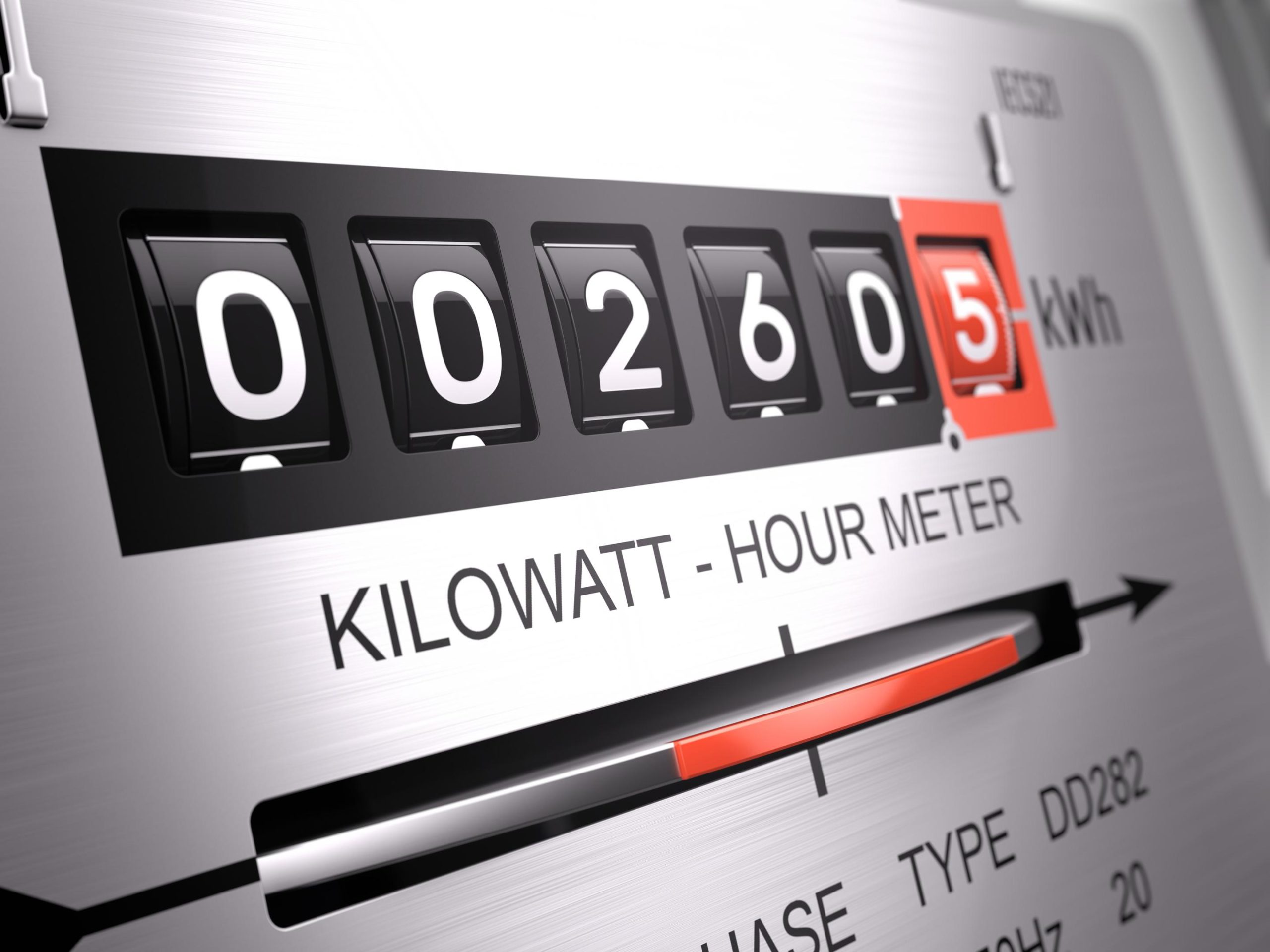
Not exactly. A kilowatt measures power, while the "unit" used by utility companies normally refers to one kilowatt-hour (kWh). In other words, kW tells you how much power is being used at a point in time, while kWh tells you how much electrical energy has been consumed over a period.
For example, if a 1 kW device runs for one hour, its energy consumption is 1 kWh. This is how utilities measure electricity use and calculate electricity consumption. In power supply sizing, however, the W or kW rating is more important than the kWh figure because the PSU must be able to deliver the required electrical power when the load demands it.
What does a power factor of 80% mean?
A power factor of 80%, often expressed as 0.8 PF, means that 80% of the apparent power is being converted into useful real power. Power factor is a quantity used in AC electrical systems and can influence input current, efficiency and how equipment interacts with the wider electricity supply.
This is more relevant in higher-power systems, industrial plant equipment, building services and applications where utility companies or compliance requirements place importance on how equipment draws electrical energy. It does not replace the need to check output voltage, current, power output or peak output, but it can form part of the checks carried out when selecting a suitable power supply.
