 Skip to main content
Choosing the right power supply is about more than voltage, wattage and cost. Safety class matters too, and it can have a direct impact on how your product is designed, tested and approved.
IEC protection classes help define how a power supply protects users from electric shock. For engineers, product managers and sourcing teams, this can affect enclosure design, earthing, cable choice, compliance testing and long-term reliability. If the wrong protection class is selected, the result could be late-stage redesign work, failed approvals or supply delays.
That is why PSU selection should start with the full application, not just the output rating. Whether you need external, internal or low-voltage conversion products, the protection class needs to fit the product, the approval route and the working environment.
What are IEC protection classes?
IEC protection classes group electrical products by how they protect users from electric shock. For power supplies, the main classes are:
- Class I
- Class II
- Class III
These IEC power supply protection classes identify different ways to prevent hazardous input voltage from reaching the user. Each class uses a different safety method. Some need a protective earth connection, some rely on double or reinforced insulation, and others operate from a safety extra-low voltage supply.
The right choice depends on your product, its installation environment and the approval requirements for your target market.
Class I power supplies
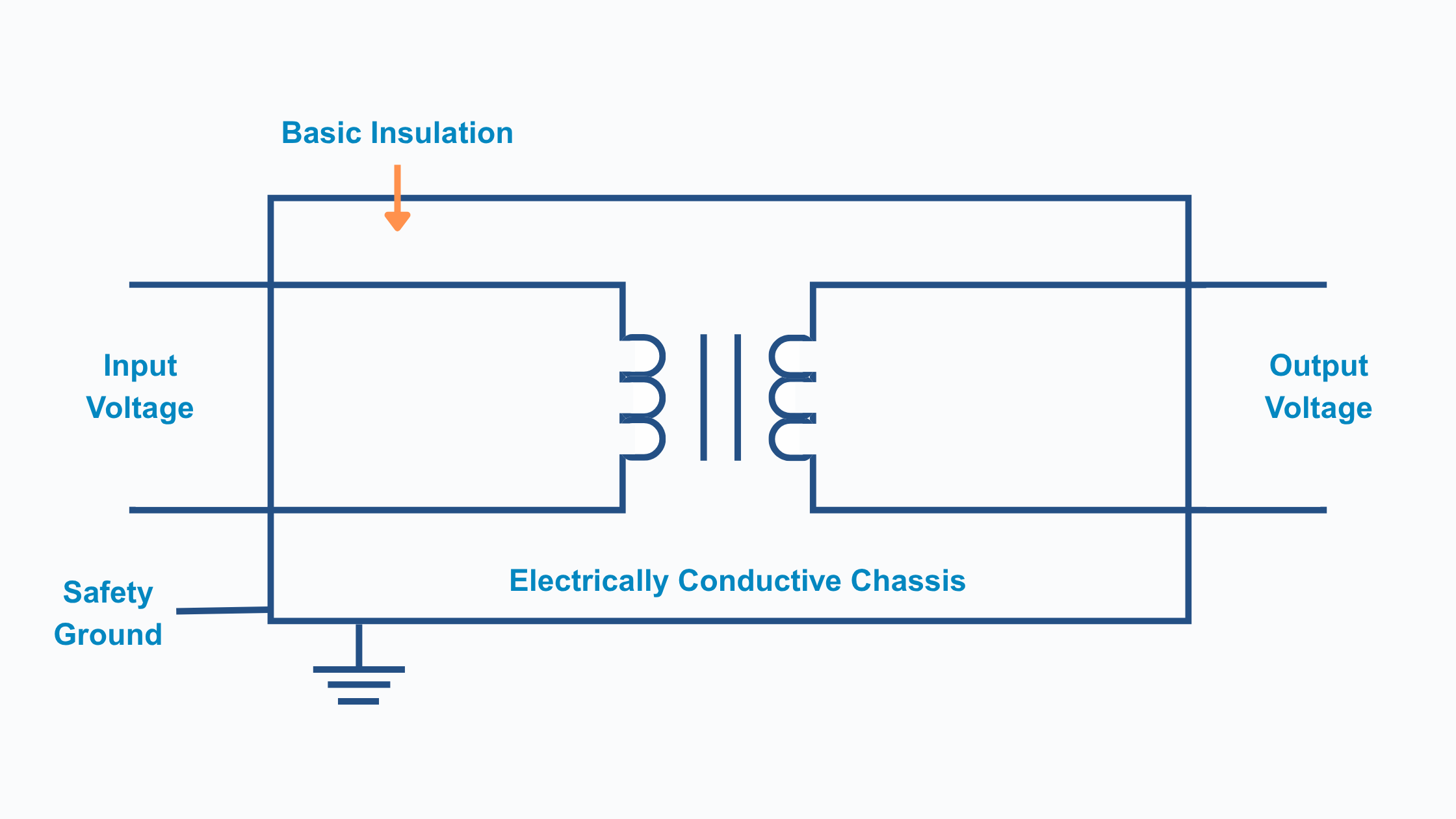
A Class I power supply uses basic insulation and a protective earth connection. If insulation fails, the earth connection gives fault current a safe path away from the user. This makes Class I power supplies common in equipment with metal enclosures, or in products where earthing forms part of the safety design.
You often see Class I supplies used in:
- Industrial equipment
- Test and measurement systems
- Automation and control panels
- Larger desktop power supplies
- Equipment with an IEC inlet and earth pin
Class I can suit products that already include an earth connection. It can support EMC performance too, as the earth path may form part of the filtering strategy. The key point is that your product design must manage the protective earth correctly, including wiring, enclosure bonding, creepage, clearance, testing and documentation.
Class I selection can also affect the wider build. The mains lead, inlet style and mechanical layout may all need to be reviewed at the same stage as the PSU. A secure mains connection may need suitable mains leads and cable options to be considered early in the design.
Class II power supplies
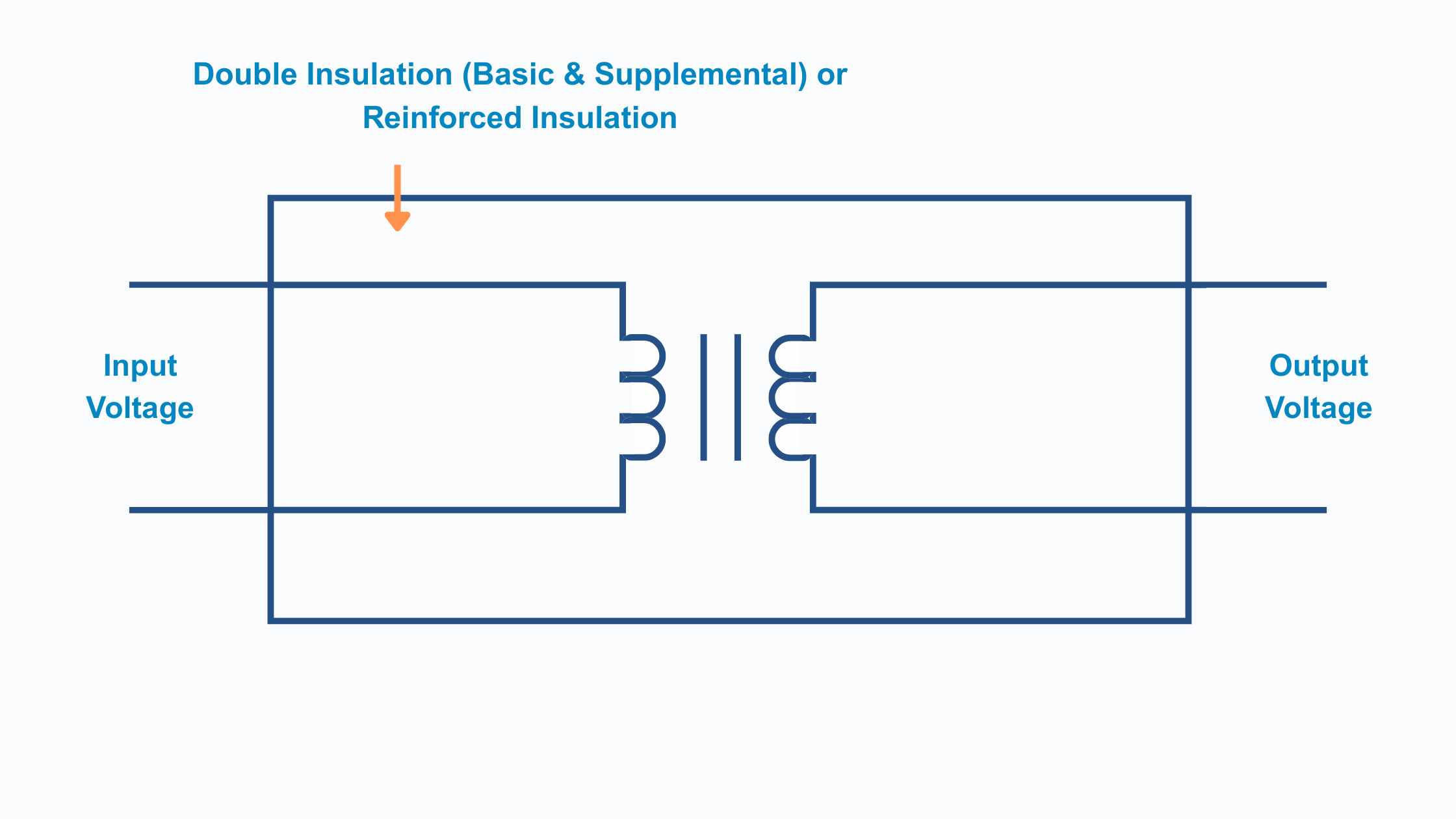
A Class II power supply does not need a protective earth connection for user safety. Instead, it uses double or reinforced insulation to protect the user from electric shock. This is why many Class II external adaptors use a two-pin or two-core mains input.
Class II power supplies can suit products where a protective earth is not practical, wanted or available. You often see them in:
- External plugtop adaptors
- Desktop adaptors
- Portable equipment
- Consumer electronics
- Smaller commercial devices
- Certain medical or home-use products, subject to the full approval route
Class II can simplify the end product connection and reduce the need for an earth connection in the final design. Even so, the full specification still needs to be checked. A Class II supply must maintain the correct insulation system inside the finished product, and factors such as mechanical spacing, enclosure material and final installation can all affect compliance.
Class III power supplies
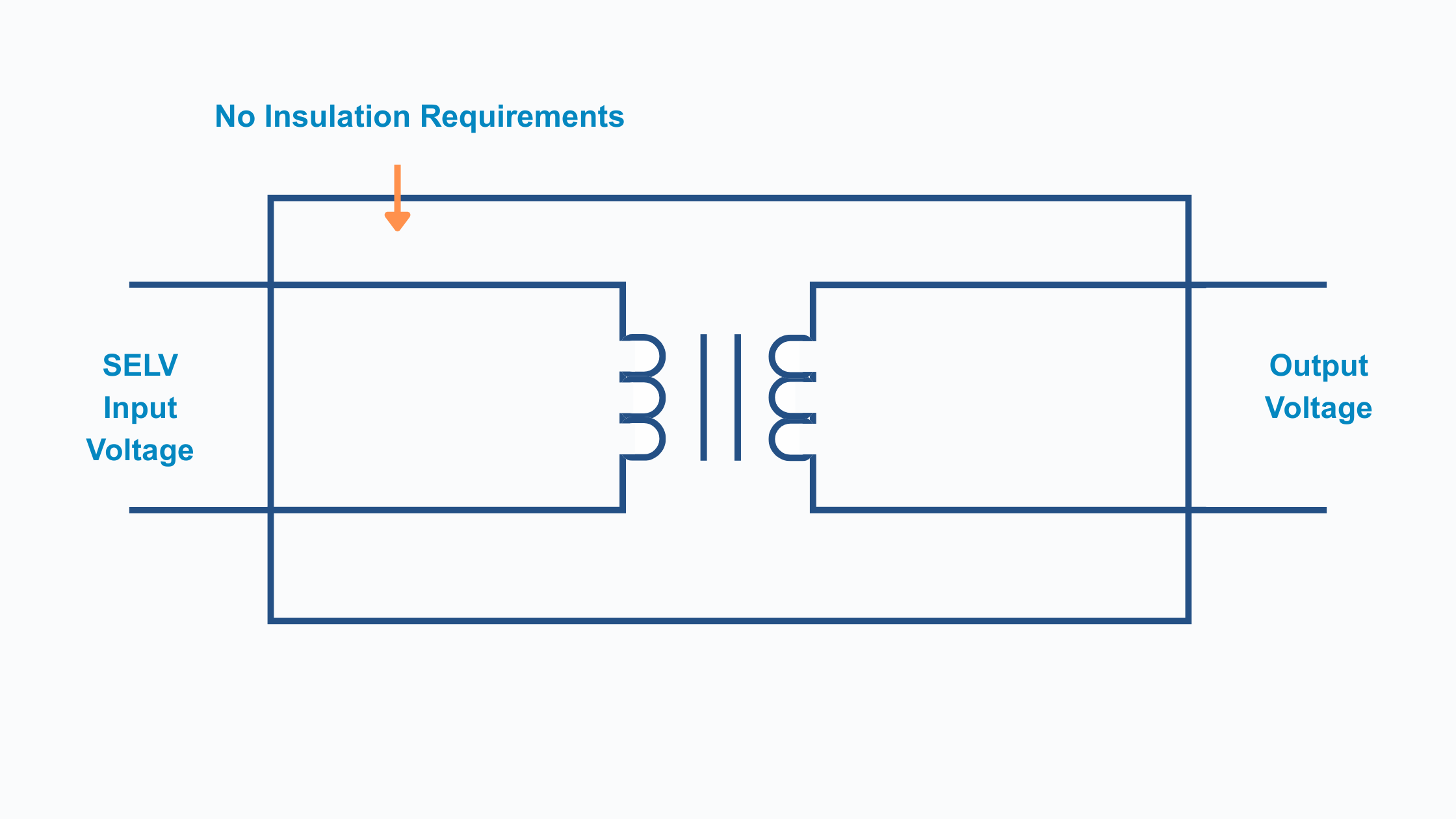
A Class III product operates from a safety extra-low voltage supply, which means the product does not connect directly to hazardous mains voltage. Instead, protection comes from the low-voltage supply feeding the equipment.
Class III designs often rely on an external AC/DC adaptor or another approved supply to provide the safe low-voltage input. You may see Class III used in:
- Low-voltage control devices
- Battery-powered equipment
- LED drivers
- Small electronics
- Sensors and monitoring devices
- Products powered by an external approved adaptor
Class III can reduce risk inside the end product, as the hazardous mains conversion takes place outside the equipment. The key point is still selection. The external supply must meet the correct safety, EMC and regional approval requirements for the application.
Class III products may also use DC/DC converters to create stable low-voltage rails inside the equipment. This can support control electronics, communications circuits and other sensitive loads.
Class II is not the same as Class 2
This is a common point of confusion. IEC Class II relates to protection against electric shock through double or reinforced insulation, which means the supply does not need a protective earth connection for safety.
Class 2, often linked to North American requirements, relates to output power limitation. It focuses on reducing fire risk by limiting the available output power under defined conditions.
The names look similar, but they describe different things. If your datasheet, approval file or customer requirement mentions Class II or Class 2, check which standard applies before you select the PSU. This is especially important where products need to meet different global standards in the electronics industry.
Why protection class matters during PSU selection

Protection class can influence far more than the power supply itself. It may affect:
- Enclosure design
- Mains inlet choice
- Cable selection
- Earthing strategy
- EMC performance
- Touch current limits
- Safety testing
- End-product approvals
- Installation guidance
- Market access
This is why the protection class should sit near the start of your PSU selection process. A supply may look suitable on output rating, size and cost, yet still create problems later if its safety class does not match the end product.
Protection class is only one part of the specification. Output stability matters too, especially where electronics need a controlled DC supply and where the difference between regulated and unregulated power supplies can affect performance under load.
Common specification risks
Many PSU issues start with a small assumption. A team may choose a Class II supply, then later find that the product needs a functional earth for EMC. Another team may choose a Class I unit without allowing enough space for the correct inlet, bonding method or enclosure design.
Some teams select a low-voltage supply for a Class III product, then find that the external adaptor does not have the approvals needed for the target market. These issues can slow down testing, add cost and create avoidable pressure late in the project.
Common risk areas include:
- Assuming the protection class is suitable without checking the end product
- Overlooking EMC needs linked to earthing
- Leaving cable and connector choices too late
- Selecting a supply before checking regional approvals
- Ignoring thermal conditions inside the final enclosure
Early technical review helps reduce that risk. Many wider PSU issues also start during layout, grounding, thermal planning and component selection, so it is worth checking for common power supply mistakes before the design moves too far forward.
How protection class fits into PSU specification
You do not need to make the protection class a separate decision from the rest of the PSU specification. It should sit alongside the electrical, mechanical, safety and supply requirements from the start.
That can include:
- IEC protection class
- Safety approvals
- EMC requirements
- Input and output ratings
- Form factor
- Earthing needs
- Cable and connector options
- Stock planning
- Long-term supply support
A wider choice of internal power supplies, external adaptors, desktop units, LED drivers and DC/DC converter solutions can help when the protection class, mechanical format, approvals and supply plan all need to align.
Bespoke power supply requirements may also need review if a standard unit does not fully fit the design.
Get the protection class right from day one
IEC protection classes help define how your power supply protects the end user. Class I uses protective earth, Class II uses double or reinforced insulation, and Class III operates from a safety extra-low voltage source.
Each one has a place, and the right choice depends on your product, safety requirements, EMC needs and approval route.
Checking the protection class early helps reduce specification risk before the design moves too far forward. It can also make it easier to compare suitable PSU options, avoid late-stage changes and support a smoother route from concept through to supply.
