 Skip to main content
- What Is An Internal Power Supply?
- How Internal Power Supplies Work
- Key Components of Internal Power Supply Units
- Types of Internal Power Supply
- Key Factors When Choosing an Internal PSU
- What Sets Our PSUs Apart
- Internal PSU Efficiency and Heat Management
- Why Choose Ideal Power?
- Summary
- Frequently Asked Questions
Internal power supplies are a core part of almost every electronic system. Whether powering a compact embedded board or a full industrial cabinet, these units convert incoming AC power into safe, usable DC power for internal circuits. While often overlooked, they directly impact system reliability, energy use, and thermal performance.
Internal power supplies are a core part of almost every electronic system. Whether powering a compact embedded board or a full industrial cabinet, these units convert incoming AC power into safe, usable DC power for internal circuits. While often overlooked, they directly impact system reliability, energy use, and thermal performance.
What Is An Internal Power Supply?
An internal power supply unit (PSU) is installed within a device to convert mains AC power into stable, regulated DC power. This enables safe and efficient operation of the device’s components.
Unlike an external power supply, which connects as a separate unit, internal PSUs are integrated into the system’s enclosure. This allows for reduced cable clutter, better thermal management, and longer-lasting long-term reliability. You will find them in everything from medical equipment and industrial control systems to embedded electronics and telecoms infrastructure.
At Ideal Power, we supply a wide selection of internal PSUs designed for compact design, energy efficiency, and reliability. Our models meet global compliance standards and are available in a range of formats to support different layouts and installation environments.
How Internal Power Supplies Work
An internal power supply unit converts AC power into regulated DC power through a controlled, multi-stage process designed for reliable operation and consistent energy efficiency. Regulated DC voltage is then distributed via stable power connectors, ensuring safe delivery of direct current to internal systems.
The process begins with input filtering, which suppresses electrical noise and protects sensitive internal components. This is followed by rectification, converting alternating current into unregulated direct current. A high-frequency switching stage then adjusts the voltage to meet specific power requirements, while output filtering smooths the DC power before it reaches the device’s internal circuitry.
Each internal power supply contains essential components such as transformers, rectifiers, capacitors, and voltage regulators, all working together to support efficient power delivery. Many units include built-in safeguards against short circuits, overvoltage, and excess heat during extended use. This helps to reduce power consumption and ensure long-term reliability in a range of electronic devices.
Key Components of Internal Power Supply Units
Every internal power supply includes essential components that work together to convert AC input into stable direct current and maintain safe, reliable operation. These include transformers to adjust voltage levels, rectifiers for AC to DC conversion, capacitors for energy storage and filtering, and voltage regulators to maintain a constant output for the device’s internal components.
In modern power supply units, these components are designed to deliver high energy efficiency while meeting strict safety and performance standards. Advanced models also feature built-in short circuit protection, overvoltage protection, and thermal safeguards to manage heat generated during use. These protections support ongoing use, particularly in high-demand environments like industrial Installations and embedded electronics. Where system reliability is critical.
Types of Internal Power Supply
At Ideal Power, we supply a wide selection of internal power supplies designed for efficiency, stability, and dependable performance across a variety of industries. Whether you’re designing a new medical device, upgrading industrial equipment, or sourcing reliable power for telecoms and networking applications, our PSUs are built to deliver consistent results with low energy consumption and minimal disruption.
Our product offering includes a number of specialised PSU types, each tailored to suit different environments and installation needs.
DIN Rail PSU
Engineered for industrial control systems, DIN rail power supply units offer secure, standardised mounting and are widely used for reliable, space-efficient integration in automation panels, production lines, and electrical cabinets. Their modular form factor supports clean installation and ease of maintenance in demanding industrial environments.
Enclosed PSU
Encased for protection, enclosed internal power supplies are designed to operate in harsh or dusty environments where durability is essential. The casing shields sensitive internal components, providing a robust solution for factory equipment, LED lighting solutions, and security devices. These models are ideal where exposure to vibration or airborne debris is expected.
Open-Frame Chassis
These lightweight, compact power supply units offer excellent airflow and efficient heat dissipation, making them ideal for applications where cooling and serviceability are key. Commonly found in telecoms, medical devices, and embedded electronics, open frame PSUs support high energy efficiency and flexible integration into enclosed system designs.
PCB Mount
Designed to mount directly onto printed circuit boards, PCB mount internal power supplies offer reliable power delivery with minimal space requirements. These compact units are often used in OEM applications, supporting space-conscious builds and seamless integration within tightly packed electronic devices.
U-Frame PSU
U-frame PSUs feature a partially open structure with minimal metal housing, striking a balance between airflow and basic protection. These models are often selected when excess heat is managed by the host enclosure, and where a compact design is required. They integrate closely with the device’s internal components, offering reliable performance for embedded systems and controlled environments.
These PSU formats are used across industries, including telecommunications equipment, consumer electronics, and portable computers, where size, reliability, and efficiency are critical.
Need help choosing the right PSU? We’re always happy to advise on product selection, compatibility, and compliance to ensure you get the best fit for your project.
Key Factors When Choosing an Internal PSU
Choosing the right internal PSU depends on more than finding a unit with the correct voltage and wattage. The power supply needs to suit the electrical, mechanical and environmental requirements of the final application, while also meeting any relevant safety or compliance standards.
One of the first considerations is the required output voltage, current and total power rating. The PSU should be able to support the expected load with suitable headroom, rather than operating constantly at its maximum capacity. This helps reduce heat, improve reliability and support long-term performance.
The physical format is also important. Internal power supplies are available in several configurations, including open-frame, enclosed, DIN rail, PCB mount and U-frame designs. The right option will depend on the available space, mounting method, airflow, enclosure design and how the PSU will integrate with the wider system.
Environmental conditions should also be reviewed early. Applications exposed to high temperatures, dust, vibration or restricted ventilation may need a more robust PSU with appropriate thermal protection, cooling features or enclosure protection. For medical, industrial, telecoms or other regulated applications, certifications such as CE, UKCA, UL, CB or RoHS may also be required.
Finally, consider whether the chosen PSU can support future requirements. If the equipment may be upgraded, adapted or produced at higher volumes, it is worth considering scalability, lead times and long-term availability before selecting a final model. Ideal Power offers a wide range of internal power supply options to support different specifications, layouts and application requirements.
What Sets Our PSUs Apart
Performance, safety, and reliability are built into every internal power supply we offer. Our products go beyond output wattage, delivering design features that support long-term use in demanding environments, including:
- Universal AC input (90 to 264 volts), suitable for international applications
- Designed for high energy efficiency, including 80 Plus certified models
- Low standby power consumption
- Protection against short circuits, overloads, and excess heat
- Low leakage current and high isolation ratings for medical devices
- Thermal design to support continuous operation
- Operating temperature ranges from minus 20 to plus 70 degrees (with derating above 50)
- Safety and quality approvals including CE, UKCA, UL, CB, and RoHS
These features provide clear advantages in terms of safety, efficiency, and reliability, particularly compared to external power supplies that often lack the same level of integration.
Internal PSU Efficiency and Heat Management
Internal PSU efficiency plays an important role in overall system performance, energy use and long-term reliability. A more efficient power supply draws less energy from the grid, produces less waste heat and reduces strain on surrounding internal components. This can help lower operating costs, improve stability and extend the lifespan of both the PSU and the equipment it supports.
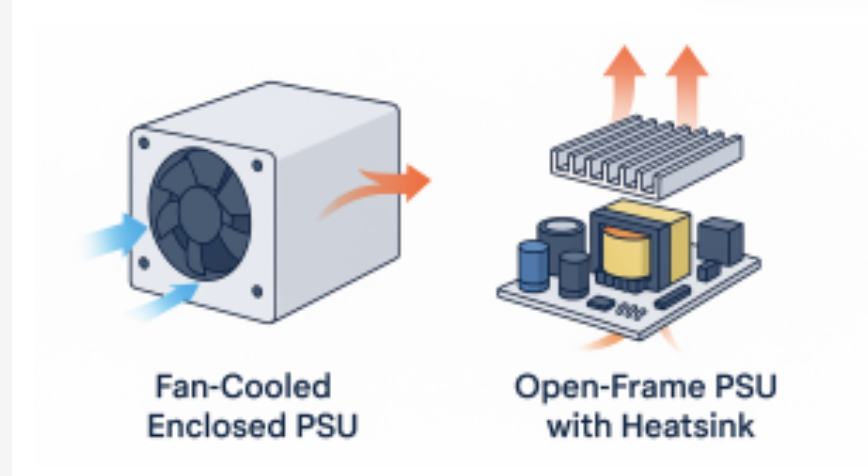
Heat management is closely linked to efficiency. All internal power supplies generate heat during operation, particularly under continuous load or in enclosed systems. Effective thermal design, including heatsinks, controlled airflow paths, temperature-regulated fans and intelligent controllers, helps maintain safe operating temperatures and prevent premature component failure.
Different PSU formats manage heat in different ways. Enclosed models may use controlled airflow and fan-assisted cooling, while open-frame and fanless power supply options rely more heavily on passive cooling, heatsinks and the host enclosure design. In applications where noise, space or continuous operation are important factors, choosing the right cooling method is essential.
Many internal PSUs also include features such as active power factor correction, low standby power consumption and smart fan control. These help improve energy efficiency, reduce electrical waste and support stable operation across applications such as medical devices, industrial control systems, embedded electronics and telecoms infrastructure.
Maintenance and Troubleshooting
An internal power supply is built for long-term operation and reliability. These power supply units are typically enclosed within the device and not user-accessible. They are generally only inspected or replaced during scheduled servicing by qualified personnel.
While routine maintenance is not required during normal use, keeping the host device in a clean, dust-free environment helps prevent excess heat generated by blocked airflow, supporting stable performance and protecting nearby circuits.
Early signs of potential power supply issues may include unstable voltage, unexpected power loss, or inconsistent system performance. If an internal power supply fails, it can result in system downtime, reduced functionality, or safety concerns. In these cases, diagnosis and replacement should be carried out by a technician to ensure continued safe and compliant operation.
Why Choose Ideal Power?
At Ideal Power, we supply a wide selection of internal power supply units built to meet the needs of healthcare equipment, automation systems, embedded platforms, and telecoms infrastructure. We focus on compact design, energy efficiency, and reliable power delivery that meets international standards across critical industries.
With decades of experience supplying certified internal PSUs globally, we are a trusted partner for dependable power solutions. Our approach is straightforward: deliver reliable products, provide technical support when you need it, and offer short lead times wherever possible.
Every power supply we offer is backed by quality certifications such as CE and UL, and many feature built-in protections against short circuits, overvoltage, and overheating. We also support projects requiring customisation, offering flexible options tailored to your technical brief, environmental conditions, or specific form factor and system layout needs.
Flexible Supply to Support Your Workflow
We also offer a flexible 12-month call-off service, giving you the ability to secure stock at today’s pricing and schedule deliveries throughout the year. This helps reduce on-site storage needs and keeps your supply chain protected, without locking up unnecessary capital.
Support That Starts with Specification
Working with Ideal Power is simple. Whether you need a stocked model or a fully engineered solution, our team will guide you from specification to delivery. We offer hands-on technical support to help you select the right power supply unit for your system and ensure a smooth integration into your final product.
Summary
An internal power supply might not be the most visible part of your system, but it plays a critical role in overall performance, energy use, and system lifespan.
With a broad range of internal PSUs available, we can support everything from compact embedded systems to larger industrial or consumer electronics. If you have specific needs around layout, cooling, or compliance, we’ll help guide you to the right model.
Browse our product pages or get in touch for tailored advice; we’re always happy to help.
Frequently Asked Questions
What is an internal PSU?
An internal PSU is a power supply unit installed inside a device or enclosure. It converts incoming AC power into stable DC power, allowing the internal components of the equipment to operate safely and reliably.
What is the difference between an internal PSU and an external power supply?
An internal PSU is built into the equipment, while an external power supply sits outside the device and connects via a cable. Internal PSUs are often chosen where a compact, integrated design is needed, while external power supplies can be useful where easier replacement or lower internal heat is preferred.
How do I choose the right internal power supply?
To choose the right internal power supply, you need to consider output voltage, current, total power rating, available space, cooling, mounting format, connector requirements and relevant safety certifications. It is also important to allow suitable headroom so the PSU is not constantly operating at its maximum rating.
What types of internal PSUs are available?
Common types of internal PSU include open-frame power supplies, enclosed power supplies, DIN rail power supplies, PCB mount power supplies and U-frame power supplies. The right type depends on the equipment design, installation environment, airflow, protection requirements and available space.
When should an internal PSU be replaced?
An internal PSU may need replacing if it shows signs of unstable output, overheating, physical damage, repeated shutdowns or failure to power up. Replacement may also be required if the equipment has been modified, the load has increased, or the original PSU no longer meets the application’s compliance or performance requirements.
