 Skip to main content
Why Early Specification Directly Impacts System Reliability
Power supply selection often appears straightforward. You confirm the voltage, match the current, and check the mechanical fit. The project then moves forward.
Yet one decision can shape the long-term stability of your product more than many engineers expect: whether to use a regulated or an unregulated power supply.
If you choose the wrong type, issues often emerge later during validation or, worse, in the field. Systems reset unexpectedly, noise increases, EMC margins tighten and reliability suffers. If you choose correctly from the outset, your design remains stable across temperature variation, input fluctuation and changing load conditions.
Understanding the difference is critical at the specification stage.
What Is a Regulated Power Supply?
A regulated power supply maintains a stable output voltage even when input voltage or load current changes. It continuously monitors the output and adjusts internally to keep the voltage within a defined tolerance band. Regulation performance is typically defined by line regulation and load regulation parameters, as explained in this technical overview by Texas Instruments.
This behaviour is essential in modern electronic systems. Digital controllers, communication interfaces, sensors and relays rely on stable voltage levels. When voltage drifts, ADC accuracy, communication stability and switching behaviour can degrade.
If your product contains microcontrollers, CAN or Ethernet interfaces, monitoring circuits or protection logic, a regulated supply is usually the safer and more reliable choice. Review how derating affects performance across temperature. Check how ripple and noise influence circuit stability. Then interpret datasheet parameters before finalising your specification.
What Is an Unregulated Power Supply?
An unregulated power supply does not actively stabilise its output. The voltage varies depending on load and input conditions. At lighter loads, the output voltage may rise above nominal. As load increases, the voltage falls.
This behaviour is not automatically problematic. In applications with a constant resistive load or wide voltage tolerance, an unregulated supply may function perfectly well. Simple analogue circuits or cost-sensitive systems sometimes allow for this variation.
Difficulties arise when an unregulated supply is used in a design that expects tightly controlled output. Engineers sometimes assume that a nominal voltage rating means the output will remain constant, which is not always the case. Understanding the difference between AC and DC power supplies, along with the common layout mistakes that can affect power supply performance, helps clarify these expectations during specification.
Where Specification Errors Typically Occur
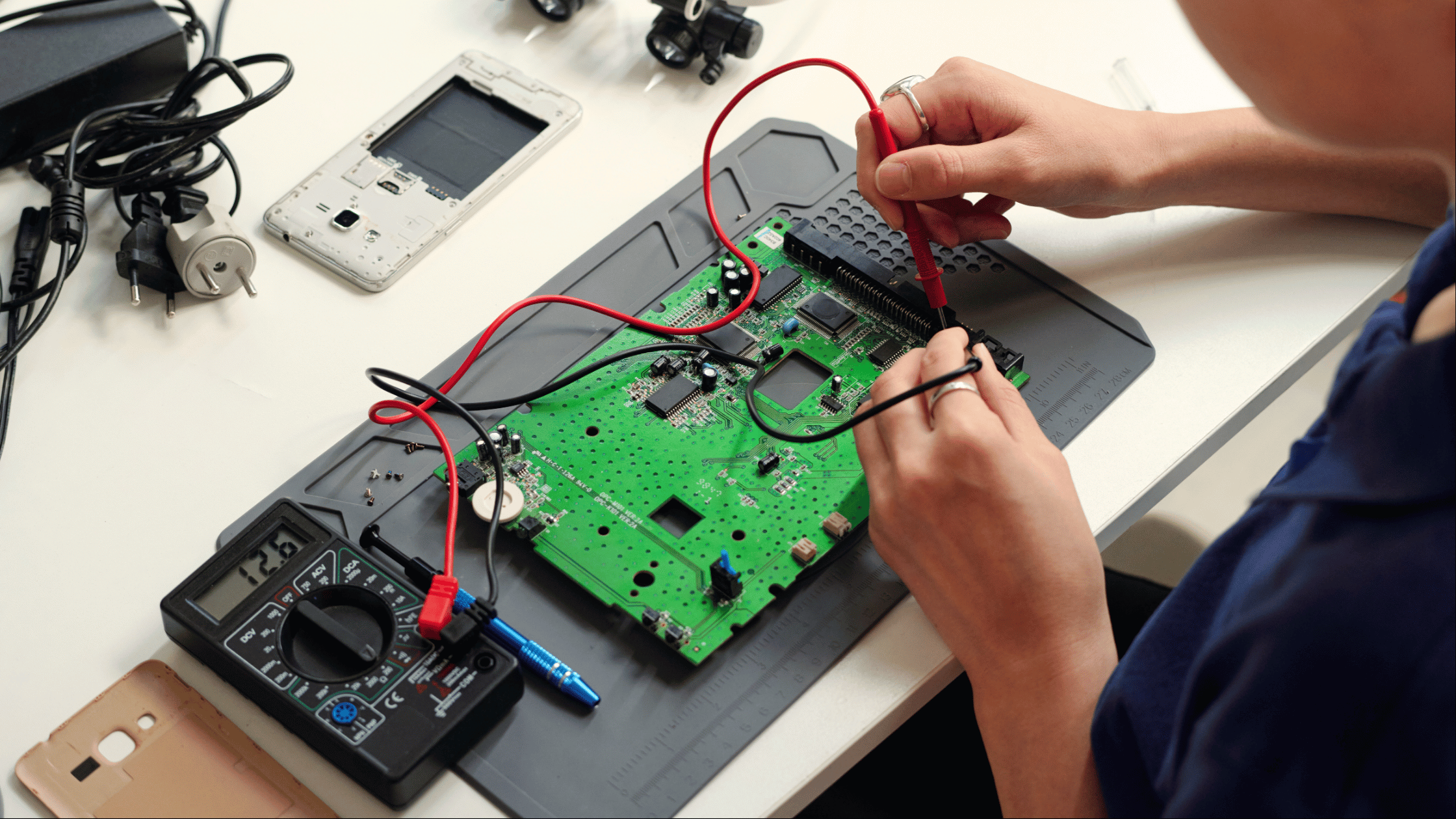
Specification issues often begin during early cost reviews. An unregulated unit appears sufficient on paper. Initial bench testing at room temperature shows no obvious faults. The design progresses into production.
Real-world conditions then introduce stress. Mains voltage fluctuates across its full range. Ambient temperature rises within a sealed enclosure. Load current shifts dynamically during operation. Under these conditions, the output voltage drifts outside its expected limits.
Control boards may reset intermittently, relays may chatter and EMC margins may reduce. The perceived saving quickly disappears once redesign, revalidation or field service costs are considered.
This is why early-stage analysis and design-in support matter. Addressing power requirements at the concept stage allows engineers to evaluate load behaviour, thermal limits and compliance considerations before a design becomes fixed. Early specification reduces the risk of redesign later in development and helps ensure the power architecture supports long-term system reliability.
Efficiency and Architecture Considerations
Most modern regulated supplies use switch-mode architecture. This approach improves efficiency, reduces heat generation and allows for compact form factors. It also supports wide input voltage ranges, which is important for global applications operating across 90 to 264VAC.
Unregulated designs often rely on transformer-based linear architectures. These remain electrically simple and inherently quiet in some cases, yet they are typically larger and less efficient. Your enclosure size, airflow constraints and thermal budget should influence this decision.
To explore this further, it helps to understand how switch-mode power supplies operate and how safety frameworks such as IEC 62368-1 influence the design of power conversion equipment. Consider these factors early. Engineers can then align architecture choices with regulatory requirements and overall system performance.
How to Decide What Your Application Requires

Before finalising your specification, evaluate your system behaviour carefully. If your load current varies during operation, the supply must respond accordingly. Designs that include digital electronics or communication interfaces require stable voltage. Products operating in environments with fluctuating input voltage benefit from regulation.
Where loads remain stable and tolerant to variation, and where cost pressure outweighs precision requirements, an unregulated solution may still be viable. The key is aligning supply behaviour with real operating conditions, not simply matching nominal voltage and current figures.
Why This Decision Deserves Early Attention
A label stating 12V does not guarantee a constant 12V output in all conditions. Bench testing at room temperature does not replicate the thermal stress inside a sealed enclosure.
Small voltage deviations can have a significant impact on logic circuits and control systems.
Clear and informed specification prevents redesign, protects your production schedule and safeguards your product reputation.
Supporting Your Specification from Concept Through Production
Selecting a power supply is not just a purchasing decision. It defines system stability and long-term reliability.
At Ideal Power, we support engineers, product designers and sourcing teams from concept stage through to production release. We review load profiles, assess derating requirements, evaluate ripple and noise limits, and align your specification with EMC and safety standards. We then secure reliable global supply to protect long-term continuity.
Whether your application demands regulated precision or carefully matched unregulated simplicity, early technical guidance reduces risk and protects performance.
If you would like a structured review of your current power architecture, get in touch with our sales and technical team. Let’s ensure your next design begins with the right foundation.
