 Skip to main content
Artificial Intelligence in the Electronics Industry
Artificial intelligence (AI) and machine learning (ML) are transforming the electronics industry, offering opportunities for innovation, efficiency, and productivity. These technologies are changing how electronic devices are designed, manufactured, and maintained. In this article, we will explore the significant impact of AI on the electronics industry, delve into specific applications, and include expert opinions and insights from industry leaders. We will also look at how reliable power supply solutions support AI-driven electronics applications.
Revolutionising the Electronics Industry with AI
AI and ML are becoming integral components of modern electronics. These technologies offer numerous advantages, including improved design precision, reduced operational costs, enhanced quality control, and greater adaptability to market demands.
Key Benefits of AI in the Electronics Industry
- Improved product quality through automated defect detection
- Reduced downtime with predictive maintenance tools
- More accurate demand forecasting and inventory management
- Lower energy consumption through intelligent optimisation
- Faster design and development cycles
These benefits are driving increased adoption of AI across electronics manufacturing, testing, and product development.
Specific Applications of AI in the Electronics Industry
Predictive Maintenance
AI-powered predictive maintenance tools are essential in reducing downtime and prolonging the lifespan of manufacturing equipment. By analysing data from sensors and machinery, AI can predict when a piece of equipment is likely to fail, allowing for timely maintenance. This approach minimises unexpected breakdowns and helps in scheduling maintenance activities without disrupting production. For electronics manufacturers, this can improve production efficiency, reduce repair costs, and help maintain consistent product quality.
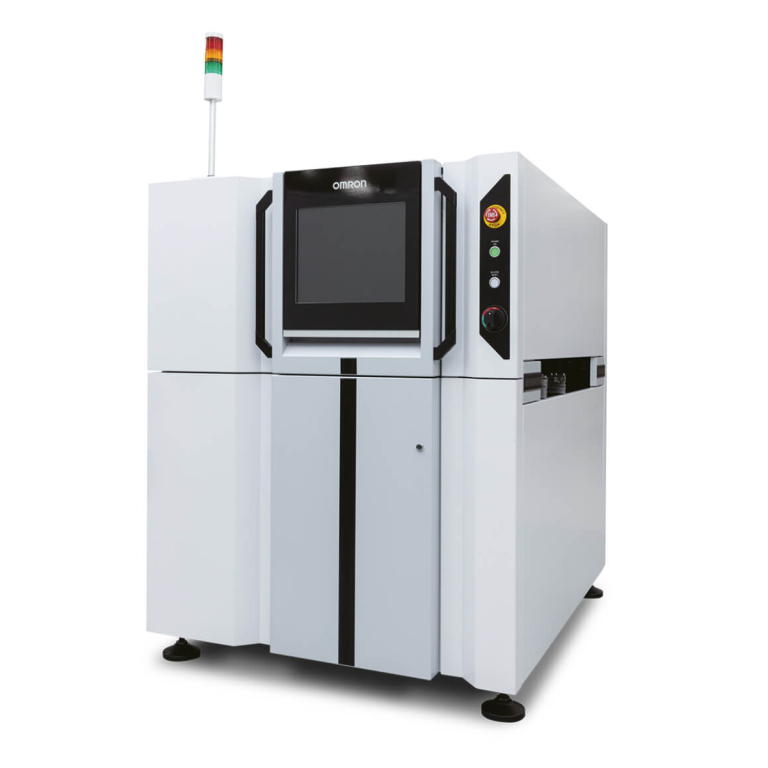
For example, the VT-S1080, a next-generation 3D Automated Optical Inspection (AOI) system from Omron, demonstrates the power of AI in predictive maintenance. It utilises advanced AI programming to monitor and report fluctuations in measured values during production, visualising defect trends and enabling proactive adjustments to maintain high-quality production standards.
In his article Exploring the impact of AI in electronic design, Brian Sathianathan, co-founder & chief technology/digital officer, at Iterate.ai explains how; “Traditional testing methodologies often fall short in their coverage of potential failure modes, whereas AI, by learning from historical data, can predict future failures with heightened accuracy. This predictive approach not only enhances product reliability but also significantly reduces time to market”.
Demand Forecasting
Akash Takyar CEO of Leeway Hertz explains how “Demand forecasting has always been pivotal for businesses to anticipate market changes and strategise accordingly. The recent leaps in machine learning and artificial intelligence have only strengthened its importance”.
AI algorithms analyse historical sales data, market trends, and external factors to predict future demand for electronic products. This enables manufacturers to optimise their production schedules, reduce excess inventory, and ensure they can meet customer demand without delays. In a fast-moving sector such as electronics, this can support better stock control, shorter lead times, and improved customer satisfaction.
Energy Optimisation
AI and ML are being used to optimise energy consumption in manufacturing plants and electronic devices. Smart algorithms can monitor energy usage patterns and suggest adjustments to reduce wastage. This not only cuts down operational costs but also contributes to sustainability by lowering the carbon footprint of manufacturing processes.
One example is in the management of HVAC systems in buildings, where AI can significantly reduce energy consumption. These systems offer ample scope for optimisation by adapting operating conditions to various influencing factors such as weather, thermal conditions, air quality, and occupancy.
AI integrates data from these variables to generate predictive and optimisation models that make decisions from a global perspective. This intelligent management leads to:
- Reduced Consumption
- Lower Operating Costs
- Improved Environmental Conditions
This same principle can also be applied across electronics production environments, where energy efficiency, heat management, and system reliability are all important operational considerations.
AI in Electronics Design and Quality Control
AI is also helping to improve electronics design and quality control processes. Machine learning models can analyse large volumes of testing and production data much faster than manual methods, helping manufacturers identify defects, optimise layouts, and improve product consistency. This is particularly valuable in electronics manufacturing, where precision and repeatability are essential.
For example, AI is increasingly used in PCB design and inspection, where machine learning models can identify layout inefficiencies and detect faults that may not be visible through traditional testing methods. This helps improve product reliability and reduce costly redesigns.
Choosing the right Power Supply Unit
Power supply units (PSUs) play a crucial role in the performance and reliability of AI electronics. Given the demanding nature of AI applications, selecting the right PSU is essential.
AI systems, particularly those involving GPUs, edge computing devices, and high-performance processing, place significantly higher demands on power delivery compared to standard electronics.
Here are the types of PSUs that would be particularly beneficial for AI electronics:
High-Efficiency PSUs:
- High Efficiency: These PSUs operate at high efficiency, often above 90%, which means less energy is wasted as heat. This is critical for AI systems that consume large amounts of power and require consistent performance.
- Lower Heat Output: High efficiency also translates to lower heat generation, which helps in maintaining optimal operating temperatures and extending the lifespan of components.
High Wattage PSUs:
- Powerful Output: High-wattage PSUs can provide the necessary power for high-performance AI systems, which often include multiple GPUs and other power-hungry components.
- Stability: Ensures that the system can handle peak power demands without compromising stability or performance.
PSUs with Active Power Factor Correction (PFC):
- Enhanced Efficiency: Active PFC improves the efficiency and stability of the power supply, ensuring that AI electronics receive clean and stable power.
- Regulatory Compliance: Helps in meeting regulatory standards for power efficiency and environmental impact.
PSUs with Overcurrent and Overvoltage Protection:
- Safety: These PSUs protect AI components from power surges, overloads, and other electrical issues, ensuring the longevity and stability of the systems.
- Reliability: Reduces the risk of hardware damage due to power anomalies, which is particularly important in high-stakes AI applications.
For businesses developing AI-enabled electronics, choosing the right PSU is not just about power output. Efficiency, thermal performance, protection features, and long-term reliability all matter when specifying a solution.
If you are reviewing options for a project, you may also want to explore our external power supply units, internal power supply units, and DC/DC converters to find the most suitable solution for your application.
Artificial intelligence and machine learning are transforming the electronics industry. From predictive maintenance to design optimisation and quality control, AI is enabling more efficient, reliable, and innovative electronics manufacturing. As these technologies continue to evolve, their impact on the industry will only grow, driving innovations and setting new standards.
By embracing AI, electronics companies can stay ahead of the curve, optimise their operations, and contribute to a more advanced and reliable future.
Whether you are developing advanced electronics, improving manufacturing efficiency, or specifying reliable power solutions for AI-driven systems, having the right components in place is essential.
Do you have an upcoming project that requires a power supply unit? Get in touch with us to see how we can help you!
Frequently Asked Questions
How is artificial intelligence used in the electronics industry?
Artificial intelligence is used across the electronics industry for predictive maintenance, quality control, demand forecasting, and design optimisation. By analysing large volumes of data, AI helps manufacturers improve efficiency, reduce downtime, and enhance product reliability.
What are the benefits of AI in electronics manufacturing?
AI improves manufacturing processes by increasing accuracy, reducing operational costs, and enabling faster decision-making. It also helps identify defects earlier in production, optimise workflows, and improve overall product quality.
How does AI improve predictive maintenance in electronics?
AI uses data from sensors and equipment to detect patterns that indicate potential failures. This allows manufacturers to carry out maintenance before issues occur, reducing downtime and extending the lifespan of machinery.
Why are power supply units important for AI electronics?
AI systems often require high and stable power due to their processing demands. Reliable power supply units ensure consistent performance, prevent system failures, and protect sensitive components from electrical issues such as voltage fluctuations or overloads.
What should you consider when choosing a power supply for AI applications?
When selecting a power supply for AI electronics, it is important to consider efficiency, power output, thermal performance, and protection features. Choosing the right PSU helps ensure system stability, energy efficiency, and long-term reliability.
